
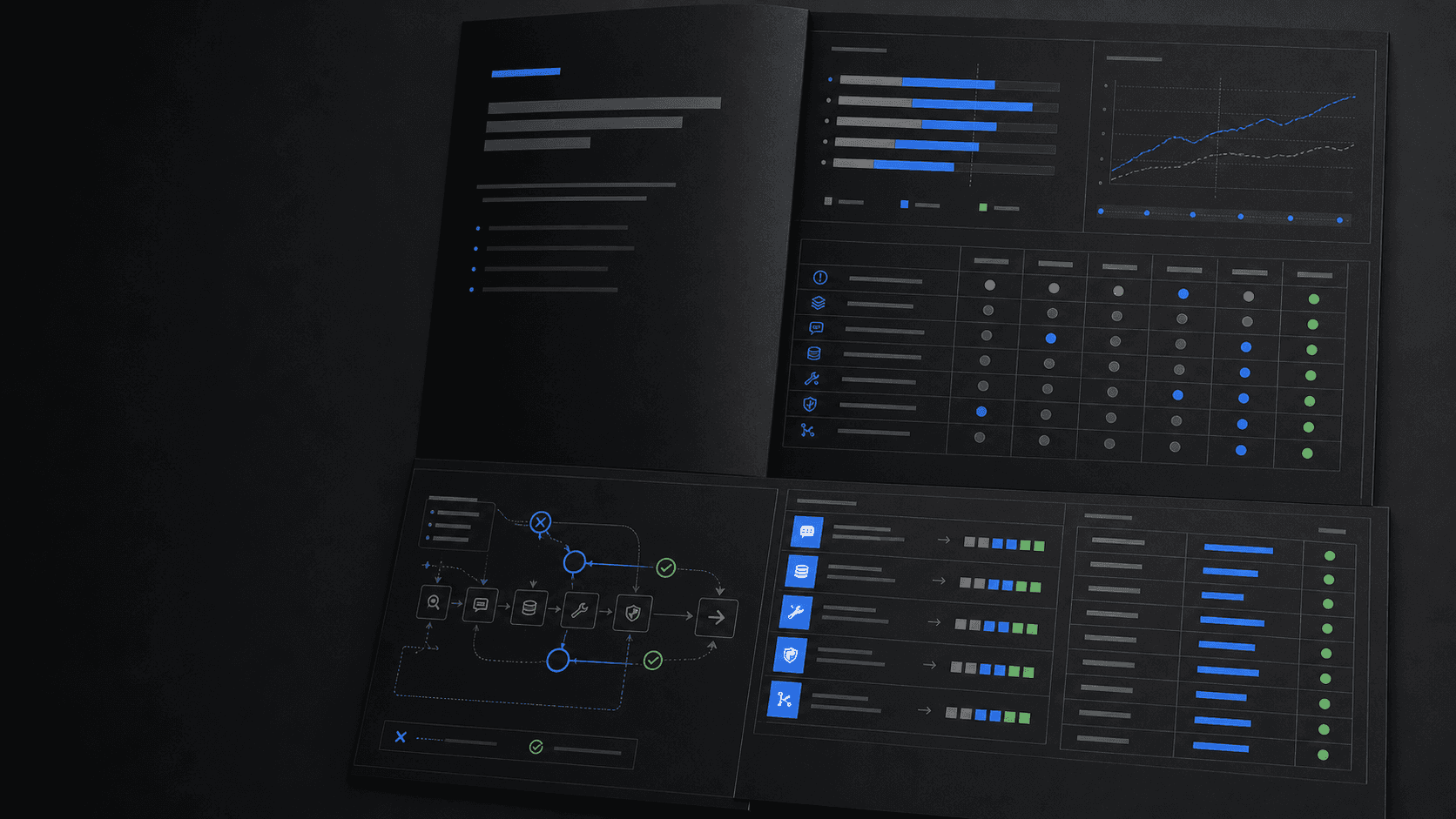
The harness, mapped.The rebuild, prioritized.
For teams whose AI feature works in demos but leaks reliability in production. We isolate the harness layers causing failures, rebuild the highest-cost paths, and define the evals that prove the improvement worked.
How the improvement happens
Trace the leak. Ship the fix. Prove the lift.
We trace where the harness loses signal.
We instrument the path between your product and the model: retrieval, prompt assembly, memory, tools, validation, retries, and fallbacks. The goal is not a diagram. It is to isolate the exact layer where useful context is dropped, distorted, or ignored.
“The highest-leverage fix is rarely the model. It is the harness layer that loses the signal before the model can use it.”
A working outcome
We do not hand you a deck.We make the harness work.
The map is the operating plan, not the product. The product is a better harness: sharper retrieval, cleaner prompt assembly, memory that keeps raw detail, safer tool handling, stricter validation, and fallbacks that degrade gracefully. We rebuild those layers and run the eval set against the improved path.
When to use it
Three moments
that change how teams rebuild.
The Harness Improvement Map is strongest when the team already knows the AI feature matters, but cannot yet explain why quality breaks or where the next engineering sprint should go.
After a promising prototype stalls
Find out whether the gap is retrieval, prompt assembly, memory, tools, validation, or fallback behavior before your team spends another cycle tuning prompts blindly.
Before rebuilding the feature
Turn vague reliability complaints into a ranked remediation plan, with the cases and metrics needed to know whether the rebuild worked.
When quality regressions keep returning
Separate model behavior from harness behavior so recurring failures are fixed in the system instead of patched one incident at a time.
Built for
Teams shipping AI features.
This work is most useful when product, engineering, and applied AI leaders need one shared diagnosis before they commit to a rebuild.
See the harness before you rebuild around symptoms.
Join the waitlist and we'll reach out when we have audit capacity for your AI product.